Have you ever felt a sharp, persistent ache on the outside of your elbow after a game of tennis? Or maybe after a long day of gardening?
That nagging discomfort might be tennis elbow. It can be frustrating and uncomfortable. The good news is: you do not have to live with it forever.
Whether you are preparing for the next tournament season or simply hope to lift your grandchild without wincing, it’s important to understand how to manage this concern.
Understanding tennis elbow is your first step toward returning to an active, discomfort-free lifestyle.
In this guide, you will learn:
- What tennis elbow is
- Why it occurs
- How to treat it effectively, step by step
Let’s get started on your path to recovery and renewed comfort.
Different Tennis Elbow Treatment Options
First, you might be wondering: “Why is it even called tennis elbow?”
Much like golfer’s elbow, the name comes from the engagement most commonly associated with the injury. The connective tissues affected are used frequently during repetitive strokes, leading to the injury. However, you do not need to be a professional tennis player to develop this condition.
Tennis elbow is caused by repetitive, excessive use of the arm tissues. It can affect anyone who performs repeated arm or wrist motions, not just athletes.
Recently, we treated a patient who suffered significant discomfort around his arm and elbow. Indicators clearly showed swelling caused by repetitive motion. Interestingly, he was not an athlete, he was a plumber.
It is quite common to diagnose tennis elbow in professions such as:
- Plumbers
- Painters
- General contractors
- Office workers who use a computer mouse all day
These occupations often involve repetitive arm or wrist motions, increasing the risk of a sign of tennis elbow pain.
Our physiotherapist conducted a thorough assessment and created a personalized care plan tailored to his needs.
The plan included:
- Specific stretching exercises
- Strengthening exercises for the arm and elbow
- Therapy modalities designed to decrease swelling and discomfort
After just a couple of weeks, the patient reported feeling much better and he was able to return to his work engagements without pain.
Important Note: Recovery can sometimes take longer than expected. The length of recovery depends on the severity of your injury. Following the recommended recovery steps is essential for effective healing. We will discuss these steps in detail in the next sections.
What is Tennis Elbow and Why Does it Matter?
To treat the discomfort, it assists to understand where it comes from.
The Anatomical Elbow
Three bones make up your elbow joint:
- Humerus (upper arm)
- Radius (forearm on the thumb side)
- Ulna (forearm bon on the pinky side)
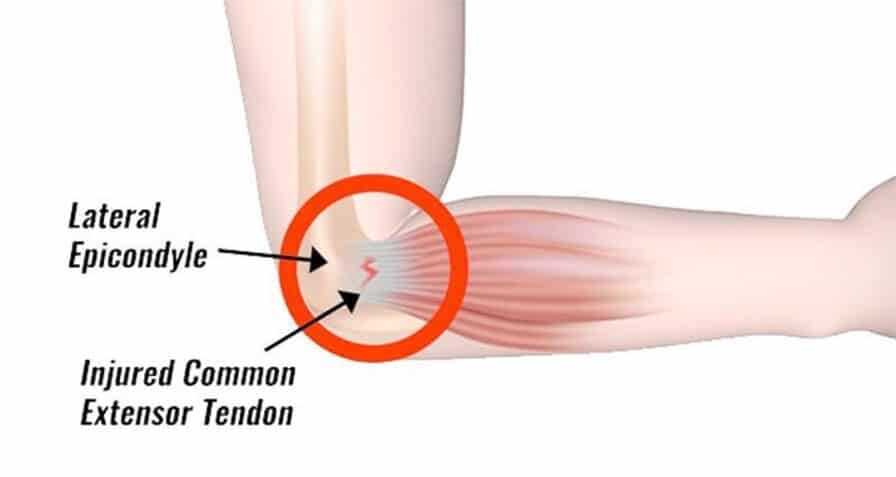
Medically known as lateral epicondylitis, tennis elbow discomfort stems from the lateral epicondyle, the bony bump on the outside of your elbow. The ECRB (extensor carpi radialis brevis) forearm tissue and connective fibers are usually the culprits. These connective fibers attach to the bone at the lateral epicondyle.
Your care plan generally focuses on minimizing pressure on this bony attachment point to relieve discomfort.
- Muscles, ligaments, and tendons hold the elbow joint together.
- When these structures are overworked or stressed, pain can develop.
- Minimize pressure and supporting these tissues helps manage the physical trauma and supports healing.
How Does Tennis Elbow Occur?
According to the American Academy of Orthopedic Surgeons, tennis elbow is a classic repetitive stress injury. Any activity that overworks the forearm tissues can cause this strain.
Developing tennis elbow often relates to how you carry out a motion. It could be related to too much:
- Gripping (like holding a racket or a hammer)
- Twisting (like using a screwdriver)
- Reaching and moving
- Lifting or throwing
These tasks can aggravate elbow discomfort, especially when performed:
- In a fixed or awkward position
- With constant repetition
- With sudden force or impact
While this is one of the most common tennis injuries, similar issues can also arise from many other day-to-day engagements.
What Does Tennis Elbow Feel Like?
The main sign is tenderness and discomfort at the lateral epicondyle. This condition can be particularly intense when gripping objects or twisting your wrist.
Common signs include:
- Pain or burning on the outer part of your elbow
- Tightness and soreness in the forearm
- Redness or visible swelling
Speaking to a physiotherapist about your elbow discomfort will help confirm your diagnosis. Once they have determined the root cause, they will guide you on the path to fix tennis elbow!
Using a Tennis Elbow Brace for Support
If you are experiencing persistent discomfort, please know that you are not alone.
There are caring solutions available to help you heal. Supportive resources and therapy options are designed to guide you through each stage of recovery, with compassionate professionals ready to provide expert advice tailored to your situation.
Personalized recommendations can ease discomfort and promote more effective healing. You deserve empathy, clarity, and a clear action plan as you address your tennis elbow issue.
A tennis elbow brace, can become a trusted companion in your recovery journey. By using a tennis elbow support, you are giving your arm gentle yet effective reinforcement and targeted compression to the outside of your elbow, providing comfort precisely where the soft tissues and connective fibers are most vulnerable.
By minimizing strain on the injured zone, a quality tennis elbow support can offer meaningful sign relief, help calm irritation, and support your body’s natural healing process.
Many people find that consistently wearing a tennis elbow support, especially during engagements that aggravate the issue at hand, can make a noticeable difference in comfort.
Selecting the right tennis elbow support is about balance, gentle compression, supportive design, and comfortable fit all matter. Integrating a tennis elbow support into your routine can ease daily strains and help protect your arm as you return to sports or work.
For those new to managing this condition, your physiotherapist can show you how a tennis elbow support should be worn and adjusted for your specific needs.
Choosing the Right Tennis Elbow Brace
When you are ready to select a tennis elbow brace, it is important to find one that honors your unique needs.
Adjustability: We encourage you to seek out a brace with an adjustable strap, allowing you to fine-tune the level of compression as you heal.
Fit: The right custom fit should provide a snug, supportive feel without being restrictive. Wearing it too tightly can limit movement or cause numbness, which should be avoided. Some brand will sell one size fits all. Avoid it as it needs proper fit. If it’s too tight, you might get a tingling sensation.
Lifestyle: If you wish to return to golf or tennis, or your work involves repetitive motions, choose a custom fit brace that provides stability without sacrificing flexibility.
While price considerations are normal, investing in a comfortable and effective product such as a quality tennis elbow support is worthwhile for your wellbeing. Most brace options, including reliable tennis elbow support devices, range from $50 to $200.
Remember, your goal is to protect your elbow from further strain. This is not the time to compromise on your recovery.
Research published in the Journal of Orthopedic & Sports Physical Therapy suggests that using a brace or tennis elbow support can significantly improve discomfort-free grip strength in individuals with lateral epicondylitis, making it a valid component of a comprehensive recovery plan.
For the most reassuring results, we strongly encourage you to consult with your doctor or physiotherapist before purchasing a brace or tennis elbow support.
- Your healthcare provider can assess the specific nature of your injury.
- They will recommend the most suitable type of brace for your individual needs.
- A medical professional can show you how to wear the brace properly, ensuring both comfort and effectiveness.
If you have questions or concerns about which brace to choose, your physiotherapist can offer valuable guidance based on experience and best practices.
How to Treat Tennis Elbow in Five Steps
Ready to get back on the course or the court? Here is a structured approach to healing.
1. Give Yourself (a.k.a. Your Elbow) a Break!
Easier said than done, right? But the simple step of avoiding engagements that aggravate your discomfort is crucial. By giving your elbow a break, you allow the micro-tears in the connective tissue to heal.
This does not mean you have to give up your active lifestyle forever.
- Use proper support, such as an elbow strap or brace, to help you stay active while minimizing irritation.
- Getting used to wearing a brace may take some time.
- These devices are very helpful for supporting weak or injured muscles and joints.
2. Reduce Swelling
Tennis elbow discomfort stems from irritated connective tissue. Therefore, managing that swelling is key.
- Ice Therapy: Applying ice to the affected zone for 15-20 minutes can minimize swelling.
- Professional Modalities: Physiotherapists may use advanced modalities such as ultrasound, laser therapy, or acupuncture to help decrease inflammation more deeply than ice alone can.
3. Modify and Adapt Your Activity
Gripping is commonly the biggest issue. While not all activities can be avoided, many can be adjusted.
- Change your equipment: If you play tennis, check your racket grip size. A grip that is too small or too large forces you to squeeze harder, increasing strain.
- Modify tools: Change the size of the item you are gripping, whether it is a paintbrush, a tool, or a pencil.
- Use support: Using a wrist splint, strap, or brace (like those from the Tensor brand) can limit how much you flex or extend your wrist, reducing strain on the forearm and improving overall support. This type of product is especially useful for people who notice discomfort during everyday activities at work or play. Choosing a wrist splint or tennis elbow support that offers both adjustability and quality is important, as not every product will provide the optimal support for every person. When considering which wrist splint or support to buy, compare the features, type, and price, not just brand reputation, to find the option that meets your specific needs. For many people, investing in a product that combines the best type of support and the right price can make all the difference in daily comfort..
4. Stretch and Strengthen the Muscles
Exercises to stretch and strengthen your wrist and forearm tissues are vital for preventing recurrence. A systematic review in the North American Journal of Sports Physical Therapy highlights that strengthening exercises, particularly eccentric movements (lengthening the tissue under tension), are effective for treating tennis elbow.
Try this simple exercise:
- Bend your elbow at a right angle.
- Extend your hand outwards, palm facing up.
- Twist your wrist around gradually until your palm is facing down.
- Hold the position for 5 seconds.
- Repeat nine more times.
- Do two more sets of 10 repetitions.
Note: Ensure you can complete these without sharp discomfort. If it hurts, stop and rest.
5. Physical Therapy
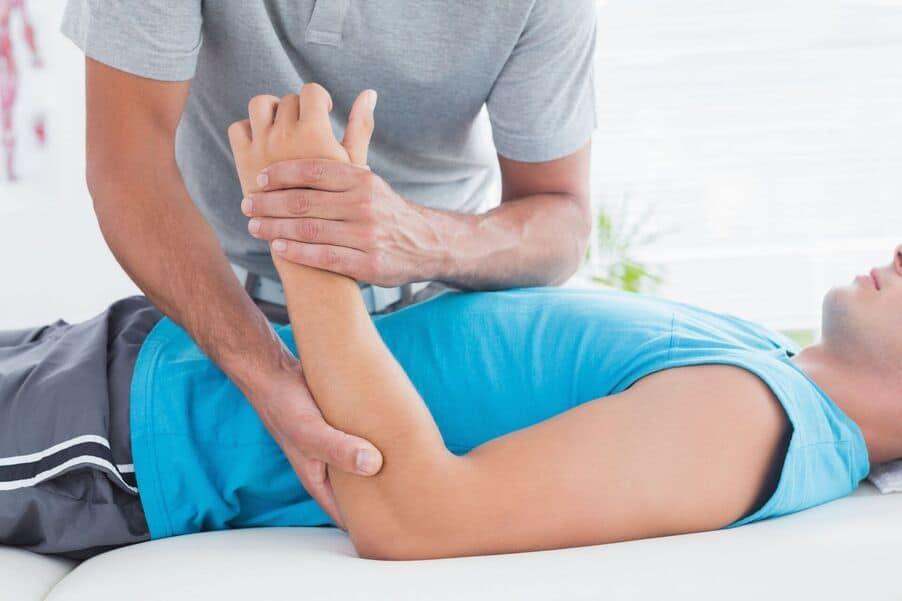
Physiotherapy is often the most effective way to assess your healing and restore function. Here’s what you can expect from physiotherapy:
- A thorough assessment of your injury and overall elbow function
- A personalized treatment plan to reduce or eliminate discomfort and swelling
- Instruction in specific exercises that promote healing and strengthen the affected area
- Guidance on ways to modify or adapt the engagement that contributed to your tennis elbow
- Ongoing support and adjustments to your plan as you progress
With expert guidance, you can regain mobility, reduce soreness, and return to the activities you enjoy most. If other signs and symptoms shows up, check our blog article on how physiotherapy can help.
Takeaway
Tennis elbow discomfort is common, but there is a clear path to fixing it. Try to be mindful of the activities you do, and when you experience soreness, remember to stop!
Our physiotherapy clinic in Burlington provides personalized treatment plans designed to help reduce pain, restore movement, and support long-term recovery.
- We encourage you to contact our clinic for a personalized consultation.
- You can access our online booking system for convenient appointment scheduling.
- For more information about our services, please visit our website www.pillarsofwellness.ca
Frequently Asked Questions (FAQ)
Can tennis elbow heal on its own?
Yes, tennis elbow can often heal on its own with proper rest and activity modification. However, without therapy or changes in behavior, the condition can become chronic. Seeking professional physiotherapy can speed up recovery and prevent future flare-ups.
How long does it take for tennis elbow to heal?
Recovery time varies significantly depending on the severity of the injury. Typically, mild cases may resolve in a few weeks with rest and icing. More severe or persistent cases can take several months to a year. Consistent physiotherapy exercises are proven to shorten this timeline.
Is heat or ice better for tennis elbow?
In the initial stages (the first few days or when discomfort is acute), ice is generally better to reduce swelling and numb the soreness. Once the initial swelling has gone down, or for chronic stiffness, heat can help increase blood flow and relax the soft tissue before stretching.
Can I still play golf or tennis with a brace?
Many people can continue to play with a brace, provided the discomfort is manageable and not sharp. The brace alters the forces applied to the connective tissue, protecting the injured area. However, if soreness persists even with a brace, it is a sign you need more rest.
What happens if tennis elbow is left untreated?
If ignored, tennis elbow can lead to chronic discomfort, weakened grip strength, and limited range of motion in the elbow. Over time, the connective tissue damage can worsen, potentially requiring more invasive treatments like injections or surgery.

Mari Mueller, Physiotherapy